Bengaluru, India · Dubai, UAE



What Does Biodegradable Mean? A Simple Guide With Real Examples

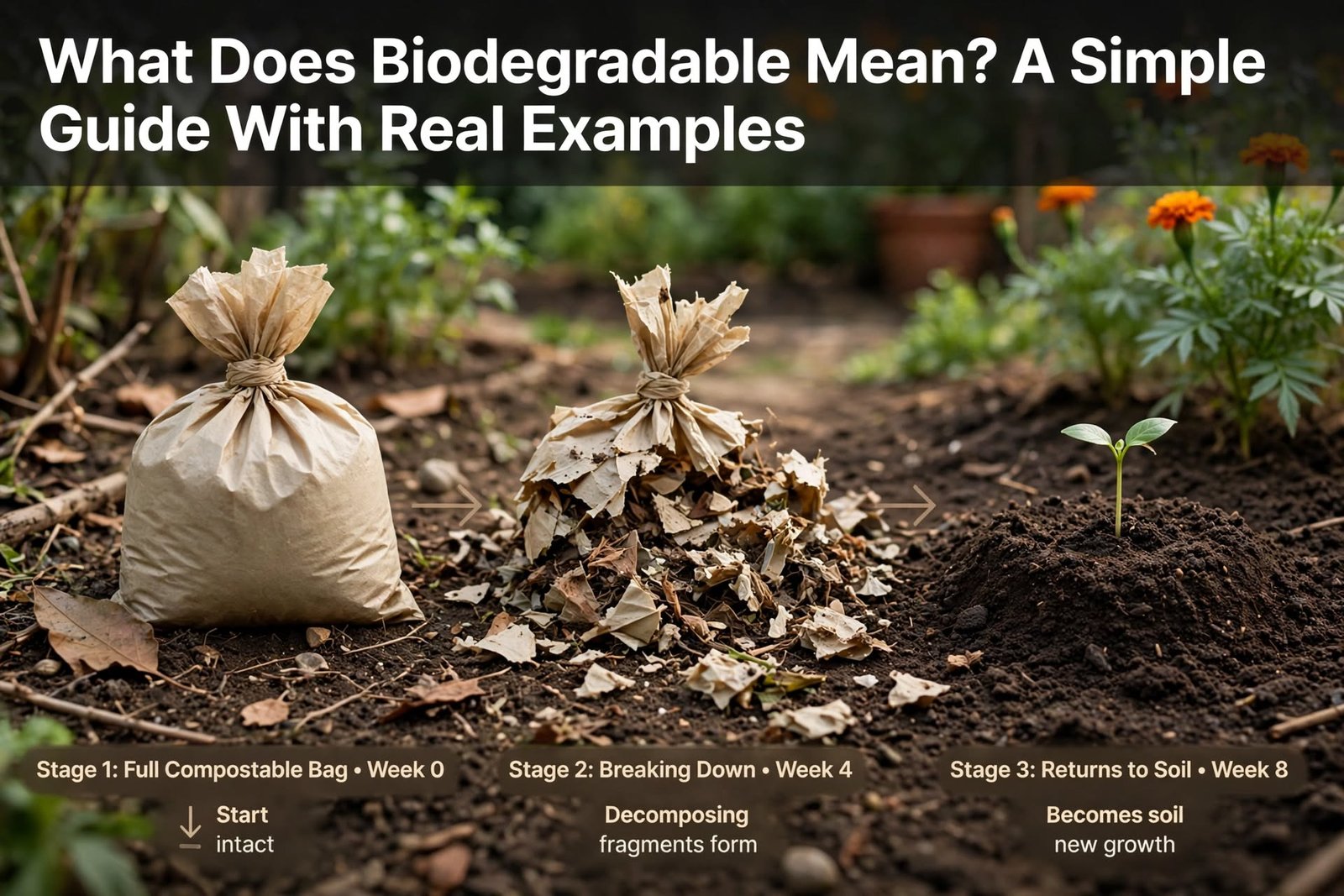
What does biodegradable mean? In simple words, something is biodegradable if it can be broken down naturally by bacteria, fungi and other tiny living things, and turn back into water, gases and natural matter that becomes part of the soil again.
A banana peel is biodegradable. Left on the ground, it slowly disappears. A plastic bottle is not. It just sits there for hundreds of years and slowly crumbles into tiny pieces of plastic.
That is the basic idea. But the word gets used a lot on packaging today, and not always honestly. This guide explains what biodegradable really means, gives you everyday examples, and shows you how to tell a truly biodegradable product from one that only claims to be.
Biodegradable meaning, word by word
The word comes from three parts:
- Bio means life
- Degrade means to break down
- Able means can be
So biodegradable simply means “can be broken down by living things”. The living things are microorganisms like bacteria and fungi. They feed on the material and turn it into water, carbon dioxide (or methane, where there is no air) and biomass, which is the natural organic matter that enriches soil.
How biodegradation works
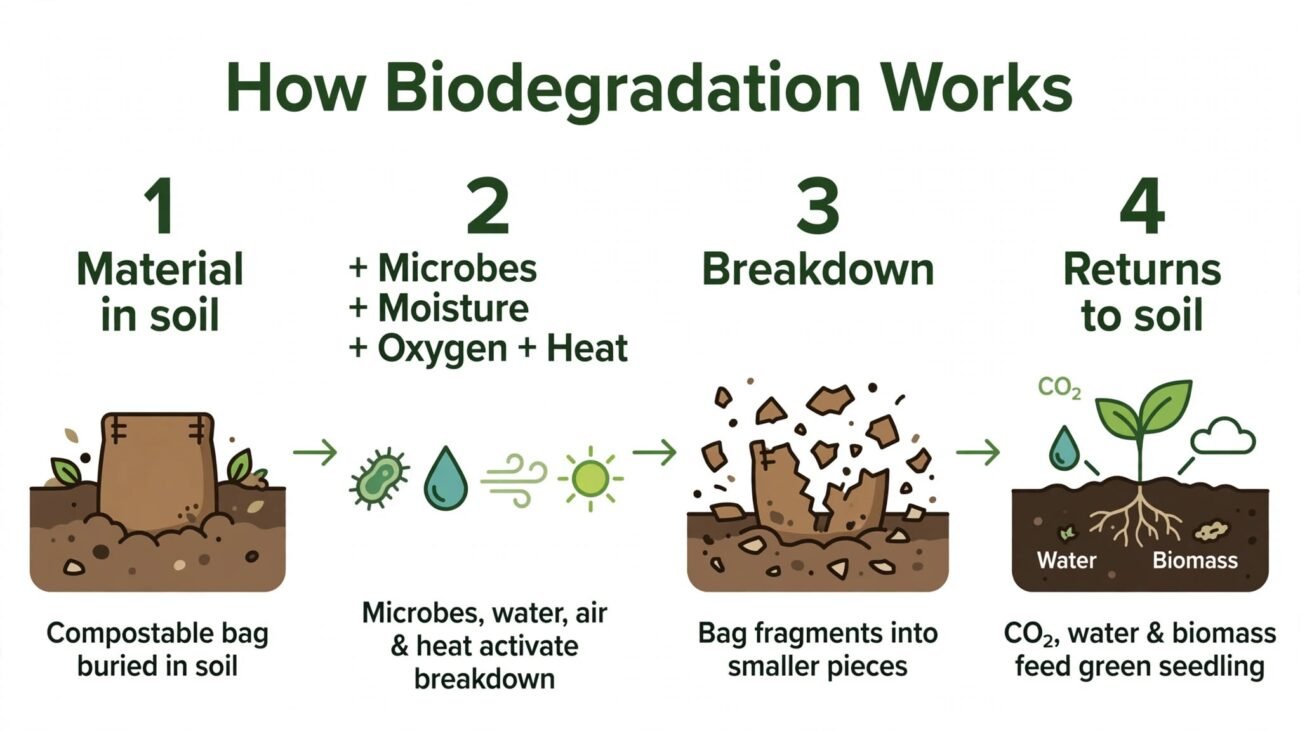
Three things decide how fast something biodegrades:
- The material itself. Plant and animal based materials break down easily because microbes are used to eating them. Most plastics are made from oil, and microbes cannot digest them.
- The conditions. Warmth, moisture and air speed things up. A compost pit in Indian weather works much faster than a dry, sealed landfill.
- The size and thickness. A thin leaf breaks down faster than a thick log.
This is why the same item can take weeks in a compost pit and years in a landfill.
Everyday examples of biodegradable things
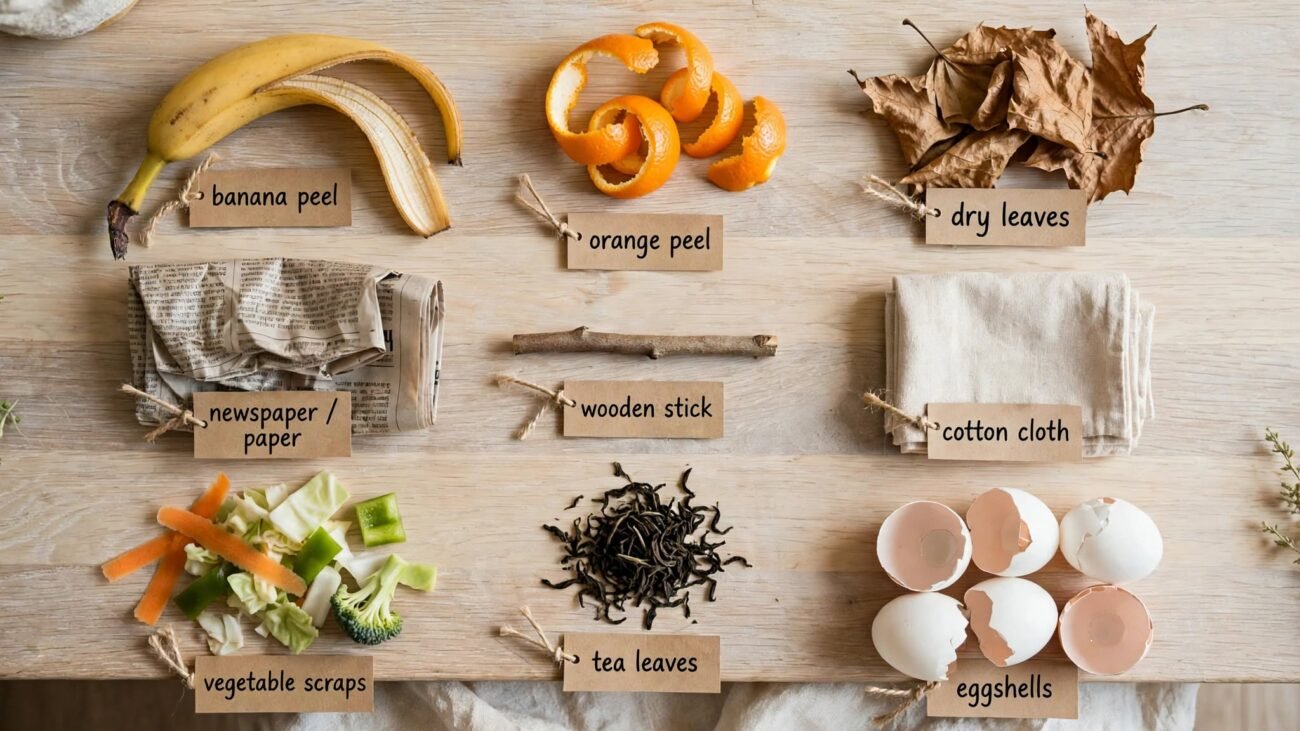
You deal with biodegradable waste every day:
- Vegetable and fruit peels
- Leftover food, rice and roti
- Tea leaves and coffee grounds
- Flowers, leaves and garden waste
- Paper and cardboard
- Cotton and jute cloth
- Wood and bamboo
- Plant-based packaging like compostable carry bags and sambar pouches
Most of what goes into the wet waste bin in an Indian kitchen is biodegradable. That is why cities ask us to keep wet and dry waste separate.
Biodegradable vs non-biodegradable
Biodegradable | Non-biodegradable |
Breaks down naturally with the help of microbes | Does not break down naturally, or takes hundreds of years |
Turns into water, gases and soil matter | Breaks into smaller pieces that stay in the environment |
Examples: food waste, paper, cotton, leaves | Examples: plastic bags, plastic bottles, glass, metal cans, thermocol |
Can be composted | Needs recycling or safe disposal |
Glass and metal are non-biodegradable but can be recycled again and again. Most single-use plastic is the real problem, because it is neither biodegradable nor widely recycled.
How long do things take to biodegrade?
These are rough estimates, and actual time depends on conditions:
Item | Approximate time to break down |
Vegetable peels | 2 to 5 weeks |
Paper | 2 to 6 weeks |
Cotton cloth | 1 to 5 months |
Compostable bags (in composting conditions) | 100 to 160 days for Biogreen bags |
Plastic carry bag | Hundreds of years |
Plastic bottle | Around 450 years |
Is biodegradable plastic really biodegradable?
This is where most confusion happens.
Some bags are sold as “biodegradable” but are actually normal plastic with a chemical additive. These are called oxo-degradable bags. They do not truly biodegrade. They simply break into smaller and smaller plastic pieces, which is how microplastics end up in soil and water.
Truly biodegradable bags are made from plant-based materials such as cornstarch and biopolymers. The best of these are compostable, which means they fully break down into compost within a set time and leave nothing harmful behind. If you want to understand that difference properly, read our guide on compostable vs biodegradable bags, and for packaging in general, compostable vs biodegradable vs recyclable packaging.
A quick tip: if a “biodegradable” bag feels exactly like thin plastic and the seller cannot tell you what it is made of, be careful.
Why biodegradable matters in India
India generates a huge amount of waste every day, and a large share of it is food and kitchen waste. When that wet waste is collected in plastic bags, it often ends up in landfills, where it rots without air and releases methane.
Switching to truly biodegradable products helps in two simple ways. The waste and its packaging can be composted together, and less plastic leaks into drains, rivers and farmland. Small switches at home make a difference:
- Use compostable garbage bags for your kitchen bin
- Carry a cloth bag, and choose compostable carry bags when you need one
- Pick biodegradable spoons and plates for parties and functions
For businesses, our guide to the top biodegradable and compostable bags shows which product suits which use.
The bottom line
So, what does biodegradable mean? It means a material can be broken down by nature, without leaving harmful traces behind. Food, paper, cotton and plant-based packaging are biodegradable. Regular plastic is not, and “biodegradable” labels on plastic need a closer look.
If you are a business looking for packaging that genuinely breaks down, Biogreen Biotech has been making compostable bags and food packaging for over 15 years. Get in touch or call +91 99806 75668 for free samples.
Frequently Asked Questions
What does biodegradable mean in simple terms?
It means something can be broken down naturally by bacteria and fungi and turned back into water, gases and soil matter. Food waste, paper and leaves are biodegradable. Regular plastic is not.
Is biodegradable the same as recyclable?
No. Biodegradable means nature can break the material down. Recyclable means it can be collected, processed and made into a new product. Glass is recyclable but not biodegradable, while food waste is biodegradable but not recyclable.
Does 100% biodegradable mean compostable?
Not always. Compostable is a stricter term. A compostable product must break down into compost within a set time and leave nothing harmful behind. Something can be called biodegradable without any time limit, so every compostable product is biodegradable, but not every biodegradable product is compostable.
What material is 100% biodegradable?
Natural materials like food waste, paper, cotton, jute, wood, leaves and plant-based materials like cornstarch are fully biodegradable. Compostable bags made from plant-based biopolymers also break down completely in composting conditions.
What are 5 examples of biodegradable?
Vegetable peels, leftover food, paper, cotton cloth and dry leaves are five common examples. Plant-based compostable bags are another everyday example.
Which is better, biodegradable or compostable?
Compostable is usually better, because it has a clear time limit and turns into useful compost. “Biodegradable” on its own can be vague.
How long does it take for biodegradable things to break down?
It depends on the material and conditions. Vegetable peels can break down in a few weeks, paper in a month or two, and Biogreen’s compostable bags in 100 to 160 days in composting conditions. Plastic takes hundreds of years.
One thought on “What Does Biodegradable Mean? A Simple Guide With Real Examples”
Comments are closed.