Bengaluru, India · Dubai, UAE




Compostable Packaging for D2C Brands: A Practical Guide to Choosing the Right Materials

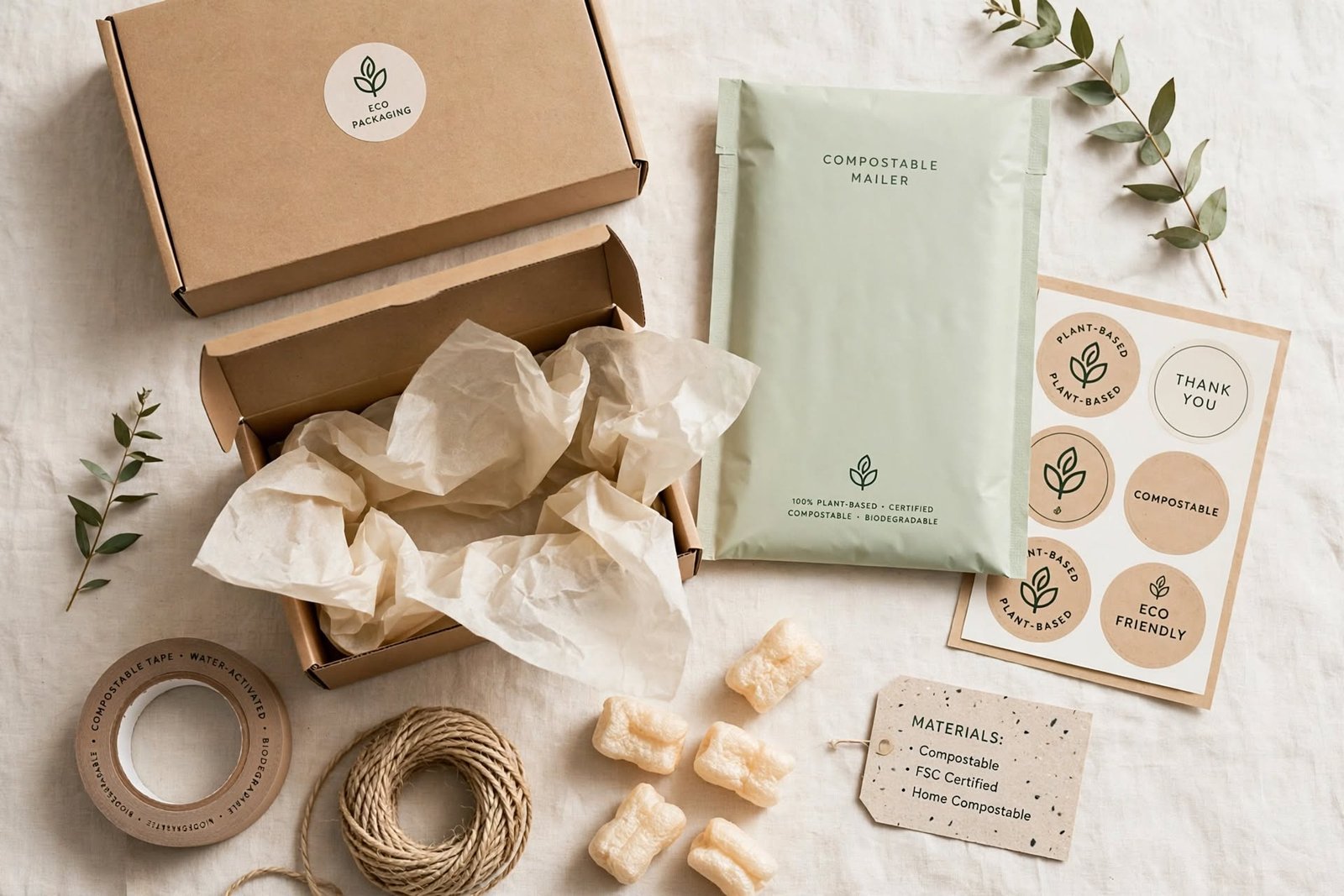
For a direct-to-consumer brand, packaging is the only physical meeting you have with your customer. They never walk into your shop. They never meet your team. The box or pouch that arrives at their door carries your whole brand, and increasingly it is judged on one more question: what happens to it after the product is used?
That is why compostable packaging for D2C brands has moved from a nice idea to a regular agenda item in founder meetings. The trouble is that the term covers many materials and formats, and the wrong choice can mean damaged goods, higher costs and claims you cannot back up. This guide walks through the materials, the formats and the decisions in the order a founder actually faces them.
Start with the product, not the material
Most brands begin by asking “what is the best compostable material?” A better first question is “what does my product need from its packaging?” Write down these five points for each product you ship:
- Weight and shape. Soft goods, rigid boxes and loose powders behave very differently in a bag.
- Moisture and oil. Skincare, snacks and sauces need a barrier. Garments do not.
- Fragility. Glass and electronics need cushioning, not just an outer bag.
- Shelf life. A packet of masala that sits for six months needs a different barrier than a T-shirt in transit for three days.
- Unboxing value. Premium gifting wants texture and print quality. A daily-use refill does not.
Once these are clear, the material choice gets much easier.
The main compostable materials, explained simply
Material | What it is | Where it works well | Watch out for |
|---|---|---|---|
PBAT | Flexible, tough biopolymer, widely blended with PLA and starch | Mailers, carry bags, films, garbage bags | Needs blending for stiffness; heat and moisture limits |
PLA | Plant-derived polymer, clear and stiff | Clear films, cups, rigid items | Softens at low heat, can be brittle alone |
PBS | Biopolymer with better heat resistance than PLA | Rigid items and blended films | Cost can be higher. |
Starch blends and fillers | Cornstarch and plant fibres mixed into polymer | Reducing cost, adding stiffness | Too much filler weakens the film. |
Cornstarch-molded products | Moulded trays, bowls and containers | Food trays, containers, bowls | Not a film; used for rigid packs |
Biogreen explains on its site how PBAT gives film the stretch and strength of conventional plastic and how fillers help balance cost, stiffness and compostability. The right ratio depends on the product, so a good manufacturer will ask what you are packing before recommending a blend.
Match each packaging format to a compostable option. Outer shipping: mailers and courier bags
For garments, accessories, books and soft goods, a compostable mailer replaces the standard poly mailer. Check size, micron, seal strength and the adhesive strip. See the biodegradable courier bag range, and read our detailed guide on sizes, strength and cost of compostable courier bags for the full checklist.
Inner packs: pouches for dry and semi-dry products
Snacks, tea, spices, supplements in powder form, pet treats and refills often use a stand-up pouch. Biodegradable stand-up pouches suit this format. For anything that needs a long shelf life, ask for barrier data and run a real shelf test. Compostable film generally has lower oxygen and moisture barrier than multilayer laminates, so it is not a one-for-one replacement for every product.
Cushioning: bubble wrap and protective film
A compostable bag around a fragile product wrapped in ordinary bubble wrap defeats the purpose. A biodegradable bubble wrap roll solves this for light to medium protection needs. For anything heavy or very fragile, test thoroughly, or add a moulded or paper-based cushioning layer.
Bundling and pallet wrap
If you also ship cartons to resellers or marketplaces, biodegradable stretch film is available for bundling and pallet use. It is a small change that matters for brands wanting a consistent story from warehouse to doorstep.
Food-contact packaging
If your brand sells ready food, sauces or meal kits, look at compostable bowls, containers and trays made from cornstarch. Always request food-contact suitability documents before you order.
The compliance side every D2C founder should know
Three pieces of the Indian rulebook matter most:
- CPCB certification. Manufacturers of compostable plastic carry bags and commodities must hold a certificate from the Central Pollution Control Board before they sell. Ask for the certificate number and the test report.
- IS/ISO 17088 and labelling. Compostable plastic products must follow this standard, and the 2024 amendment calls for the label “compostable only under industrial composting”.
- EPR. As a brand owner, you may have registration and reporting duties for plastic packaging under Extended Producer Responsibility. Compostable packaging has its own category in this framework, so confirm how it applies to you with a compliance consultant.
Biogreen shares its CPCB certificate number, plant location and CIPET test results on its certifications page, which is the kind of transparency to expect from any supplier.
Cost: think in total, not in price per bag.
Compostable material usually costs more than conventional film. But three other cost lines matter just as much:
- Damage and replacement cost. A bag that fails costs you the product, the reshipment and the customer.
- Order size and variety. Using fewer sizes and common formats brings your price down.
- Compliance cost. Switching away from uncertain plastic removes the risk of penalties and stock stoppages in states with strict enforcement.
Ask for quotes at three quantities, say 5,000, 10,000 and 25,000 pieces, and see where the price curve flattens. That tells you the sensible first order.
Be honest in your marketing
D2C brands live on trust, and this is where claims go wrong. Do not call your pack “plastic-free” if it has a PBAT-based film, and do not say “home compostable” if the certificate says industrial composting. A line like “Packed in certified compostable material” is accurate. Add a short note on how to dispose of it. Customers appreciate clarity, and regulators do too.
It is also fair to admit a limit: industrial composting facilities are not yet available everywhere in India. Brands that say so openly come across as more credible than those that overpromise.
A five-step decision process for founders
- List every packaging item you buy today: outer bag, inner pouch, cushioning, tape, labels and inserts.
- Mark which ones can move to compostable now, which need testing and which should wait.
- Request samples for the first group, with certificates.
- Run a real pilot of 100 to 300 orders, tracking damage, complaints and customer comments.
- Scale to bulk only after the pilot, and review quarterly.
Final thoughts
Good D2C packaging protects the product, tells your brand story and stays honest about what it is. Choose the format first, then the material, verify the certificates, and test with real orders before you scale. Brands that take this path rarely regret it.
If you want help shortlisting formats for your product range, reach out to Biogreen with your product list and monthly volume, and ask for samples to test.
Frequently Asked Questions
Is compostable packaging suitable for all D2C products?
No. It works well for garments, accessories, dry goods and many light products. Products needing a high oxygen or moisture barrier, or heavy and fragile goods, need extra testing or a different packaging mix.
How do I know if my packaging supplier is genuine?
Ask for the CPCB certificate number, an IS/ISO 17088 test report from a recognised lab and a QR code on the product that links to certification details.
Can I get custom printed compostable packaging for my brand?
Yes, many manufacturers offer printing. Confirm ink compatibility, minimum order quantity and lead time before approving the artwork.
Will compostable mailers raise my shipping cost?
The mailer itself may cost more, but these films are often lightweight, so weight-based shipping rates are rarely affected. Compare total landed cost.
What if my customers have no composting facility nearby?
Be transparent. State that the pack is certified compostable under industrial conditions and encourage customers to use municipal or private composting options where available.