Bengaluru, India · Dubai, UAE




Compostable vs Recycled Garbage Bags: Which One Should You Actually Use?

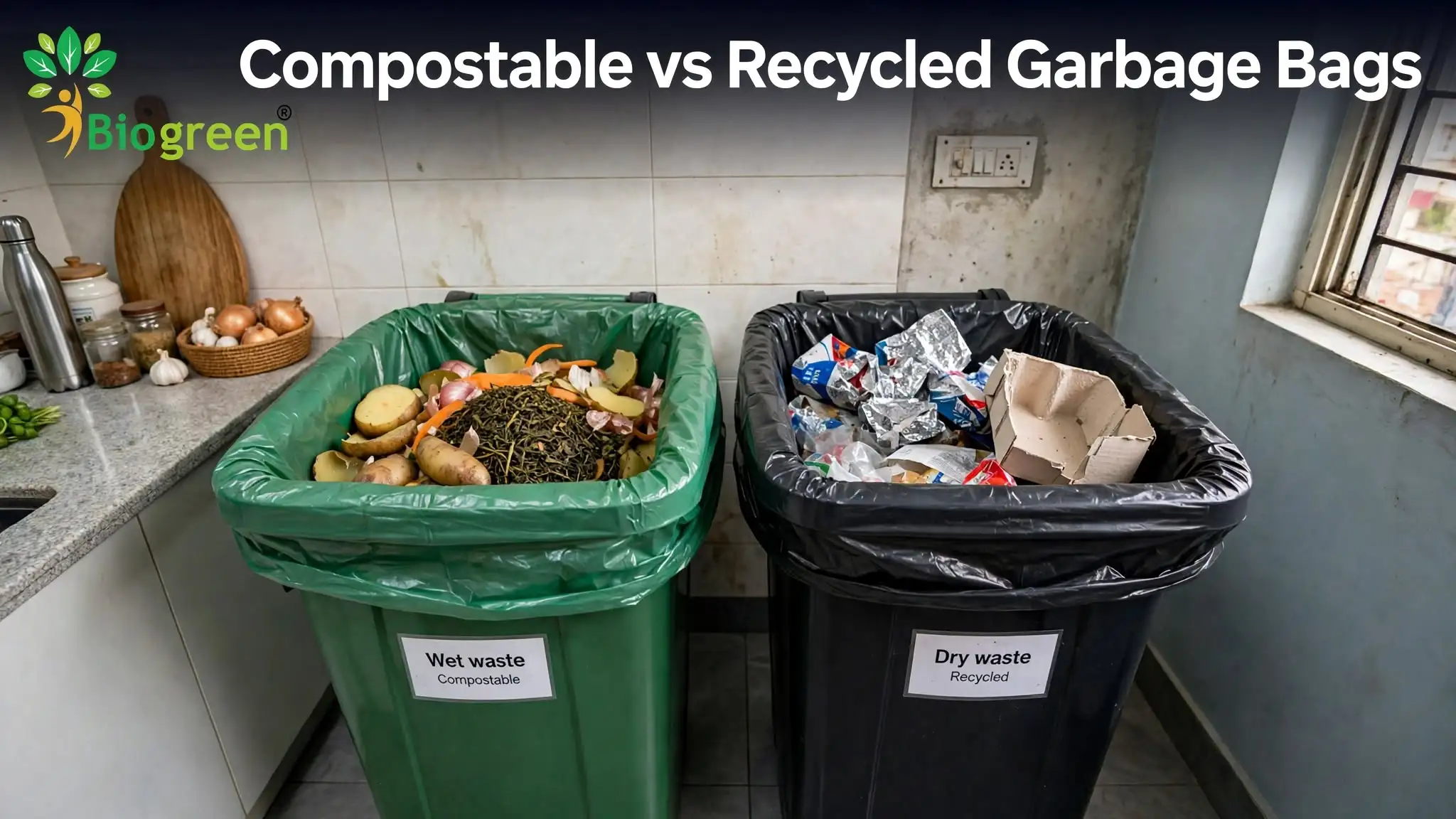
If you are choosing between compostable vs recycled garbage bags, here is the short answer. Use compostable garbage bags for wet waste like food scraps and kitchen peels. Use recycled garbage bags for dry waste like wrappers, cartons and packaging. Neither bag is “best” for everything. The right choice depends on what goes into the bin and where that bin ends up.
That is the honest version. Most articles on this topic pick a side because they sell one type. At Biogreen, we make compostable bags and we also make recycled LDPE and HDPE granules, so we see both sides every day. This guide explains how each bag works, where each one fails, what it costs, and how to use both the smart way in an Indian home, office, hotel or hospital.
What are compostable garbage bags?
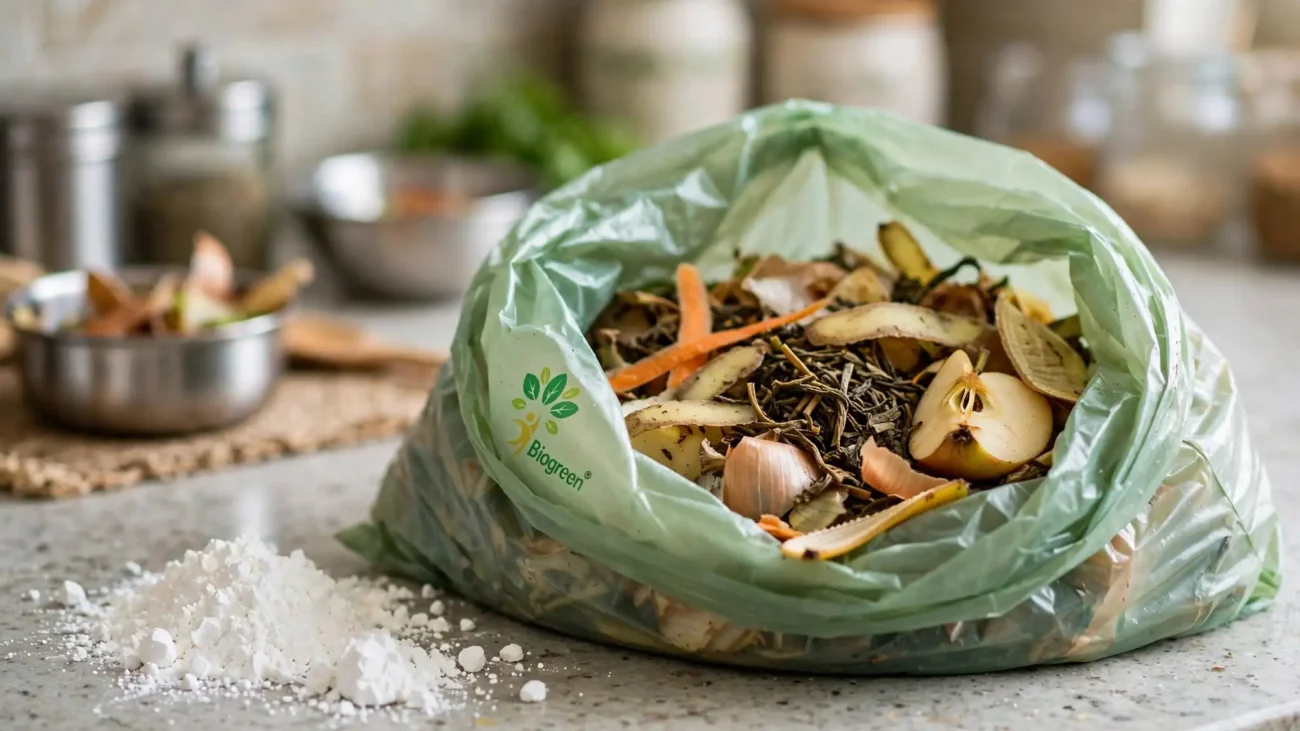
Compostable garbage bags are made from plant-based materials such as cornstarch blended with biopolymers like PBAT. When they reach the right conditions (heat, moisture and microbes), they break down into water, carbon dioxide and compost. There is no plastic left behind.
In a composting setup, a compostable bag usually breaks down within a few months. Our own compostable garbage bags are designed to compost within 100 to 160 days.
A few things to know before you buy:
- They need the right place to break down. Compostable bags do best in a compost pit, a municipal composting plant or a biogas facility. Thrown into a sealed landfill, they break down far more slowly.
- They have a shelf life. Because they are designed to break down, they should be used within roughly 9 to 12 months of manufacture and stored in a cool, dry place.
What are recycled garbage bags?
Recycled garbage bags are regular plastic bags made from used plastic instead of fresh plastic. The raw material is usually recycled LDPE or HDPE, collected from post-consumer or industrial waste, cleaned, melted into granules and blown into film again.
The big plus is that they give old plastic a second life and reduce the need for new, petroleum-based plastic. They are also strong, cheap and widely available.
The big minus is simple. A recycled garbage bag is still plastic. Once it goes to a landfill or a drain, it behaves like any other plastic bag. It does not break down for hundreds of years, and over time it turns into microplastics.
Compostable vs recycled garbage bags: side-by-side comparison
| Factor | Compostable garbage bags | Recycled garbage bags |
| Made from | Plant-based materials (cornstarch, PBAT blends) | Recycled LDPE or HDPE plastic |
| What happens after use | Breaks down into compost in a few months | Stays as plastic for hundreds of years |
| Best for | Wet waste, food scraps, garden waste | Dry waste, packaging, heavy or sharp items |
| Strength | Good for daily kitchen waste, not for very heavy or sharp loads | Very strong and tear-resistant |
| Shelf life | About 9 to 12 months | Several years |
| Cost per bag | Higher | Lower |
| What to ask the supplier | Material used (cornstarch or PBAT-based) | Percentage of recycled content |
| Composting plant | Accepted | Must be removed; it contaminates compost |
The table tells the real story of compostable vs recycled garbage bags. These two bags are not competing for the same job. They are built for different kinds of waste.
Pros and cons of compostable garbage bags
What works well
- Food waste and the bag can go into a compost pit together, so nobody has to empty food scraps out of a plastic liner.
- No microplastics are left behind when the bag breaks down properly.
- They fit naturally with wet waste segregation, which Indian cities now expect from homes, societies and businesses.
- Customers and guests notice them. For hotels, restaurants and brands, they show a real commitment to sustainability.
What to watch out for
- They cost more per bag than plastic.
- They are not meant for broken glass, sharp metal or very heavy loads.
- Some cheap “biodegradable” bags are actually oxo-degradable plastic, which only breaks into smaller plastic pieces. Read our article on compostable vs biodegradable vs recyclable packaging to understand the difference.
Pros and cons of recycled garbage bags
What works well
- Strong, thick and leak-resistant, even with heavy waste.
- Lower cost, which matters when you use hundreds of bags a month.
- They reuse plastic that already exists, which is better than buying bags made from virgin plastic.
What to watch out for
- They are still plastic, so they add to landfill and microplastic pollution in the end.
- If food waste is collected in a plastic bag, someone has to tear it open and separate it before composting. In practice, that often does not happen, and the whole thing goes to landfill.
- “Recycled” claims are hard to verify. Ask the supplier how much recycled content the bag actually has.
Which bag for which waste in an Indian home or business?
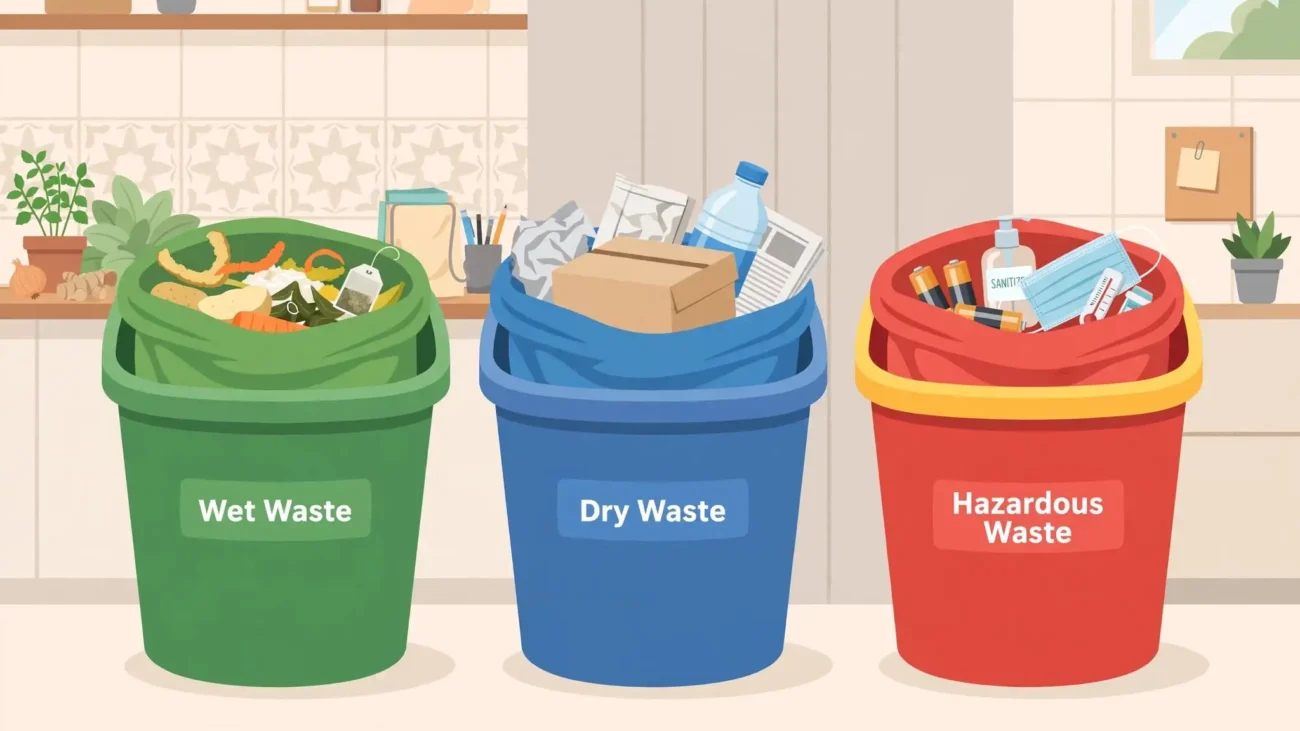
India’s Solid Waste Management Rules ask every household and business to separate waste at the source into wet, dry and hazardous waste. That rule makes this decision much easier.
At home
- Kitchen bin (wet waste): compostable garbage bags. Peels, leftover food, tea leaves and flowers can go straight into a home compost pit or to your society’s composting unit with the bag.
- Dry waste bin: recycled garbage bags, or no bag at all if your waste collector takes dry waste loose.
- Sanitary and hazardous waste: keep separate, wrap as your local body instructs.
In hotels, restaurants and cloud kitchens
Food waste is the biggest part of the bin here. Using compostable bags in kitchen bins makes it easy to send wet waste to a composting or biogas partner. Our guide to compostable packaging for hotels covers how big properties set this up.
In offices and housing societies
Use compostable bags in pantry and canteen bins, and recycled bags in desk bins and common areas where waste is mostly paper and packaging.
In hospitals
Biomedical waste follows its own colour-coded rules. For general kitchen and ward food waste, compostable bags work well. See our article on compostable bags for hospitals for more detail, and use proper bio hazard bags for infectious waste.
Cost comparison: compostable vs recycled garbage bags
Compostable garbage bags cost more per piece than recycled garbage bags. But the price per bag is not the full picture.
Think about it this way. If a restaurant uses compostable bags only for wet waste, which is often the largest share of its daily garbage, and recycled bags for the rest, the extra cost is much smaller than switching every bin. You also avoid the labour of emptying food out of plastic bags before composting.
Buying in bulk directly from a manufacturer also brings the price down a lot compared to retail packs. If you want a clear monthly number, our monthly compostable bag requirement calculator helps you work out how many bags you actually need. And before placing a large order, read the mistakes people make buying compostable bags in bulk.
Quick check before you buy compostable garbage bags
Many bags sold as “eco-friendly” or “biodegradable” are ordinary plastic with an additive. Always ask the supplier what the bag is made of and how long it takes to compost. For the full checklist on thickness, sizes and scented options, read our guide on how to choose biodegradable garbage bags.
Our recommendation
When it comes to compostable vs recycled garbage bags, for most Indian homes and businesses, the best setup is not one bag or the other. It is both, used for the right waste:
- Compostable garbage bags for wet waste, so food scraps can actually be composted.
- Recycled garbage bags for dry waste, so you are at least reusing plastic that already exists.
If you can only switch one bin, switch the kitchen bin. That is where compostable bags make the biggest difference.
Get compostable garbage bags for your home or business.
Biogreen Biotech makes compostable garbage bags at our unit in Chandrapur, Maharashtra, from our own plant-based granules, backed by over 15 years in compostable manufacturing. We supply homes, housing societies, hotels, restaurants, hospitals and offices across India with custom sizes, printing and bulk pricing. You can also try our scented compostable garbage bags for kitchens and washrooms.
Want to test them first? Request free samples or call +91 99806 75668, and our team will help you pick the right size and thickness for your bins.
Frequently asked questions
Which is better, compostable or recyclable garbage bags?
Neither is better for every job. Compostable garbage bags are better for wet waste because the bag and the food scraps can be composted together. Recycled or recyclable bags are better for dry, heavy or sharp waste because they are stronger and cheaper. Most homes and businesses get the best result by using both.
What are the disadvantages of compostable packaging?
Compostable packaging costs more than plastic, has a shelf life of around 9 to 12 months, and is not meant for very heavy or sharp items. It also needs a composting setup to break down quickly. In a closed landfill it breaks down much more slowly.
What are the differences between biodegradable and compostable garbage bags?
Compostable garbage bags are tested to break down into compost within a fixed time and leave no toxic residue. “Biodegradable” has no fixed time limit, and many bags sold under that word are oxo-degradable plastic that only breaks into microplastics.
What is the most environmentally friendly garbage bag?
For wet waste, a compostable garbage bag is the most environmentally friendly option because it turns into compost with the food waste. For dry waste, a bag with high recycled content, or no bag at all, is the greener choice.
Are compostable garbage bags good for the environment?
Yes, when they are genuinely compostable and end up in a compost pit, composting plant or biogas unit. They help keep food waste out of landfills, where it releases methane, and they leave no microplastics behind.
Which garbage bags are better for home use in India?
Use compostable garbage bags in the kitchen bin for wet waste and recycled garbage bags for dry waste. Pick a size that fits your bin snugly, such as 17 x 19 inches for small kitchen bins and 19 x 21 inches for medium bins.
Where can I buy compostable garbage bags in India?
You can buy them from online stores, but for regular or bulk use it is cheaper to buy directly from a manufacturer. Biogreen Biotech supplies compostable garbage bags across India with custom sizes and free samples.