Bengaluru, India · Dubai, UAE




Top Biodegradable and Compostable Bags You Should Buy in 2026

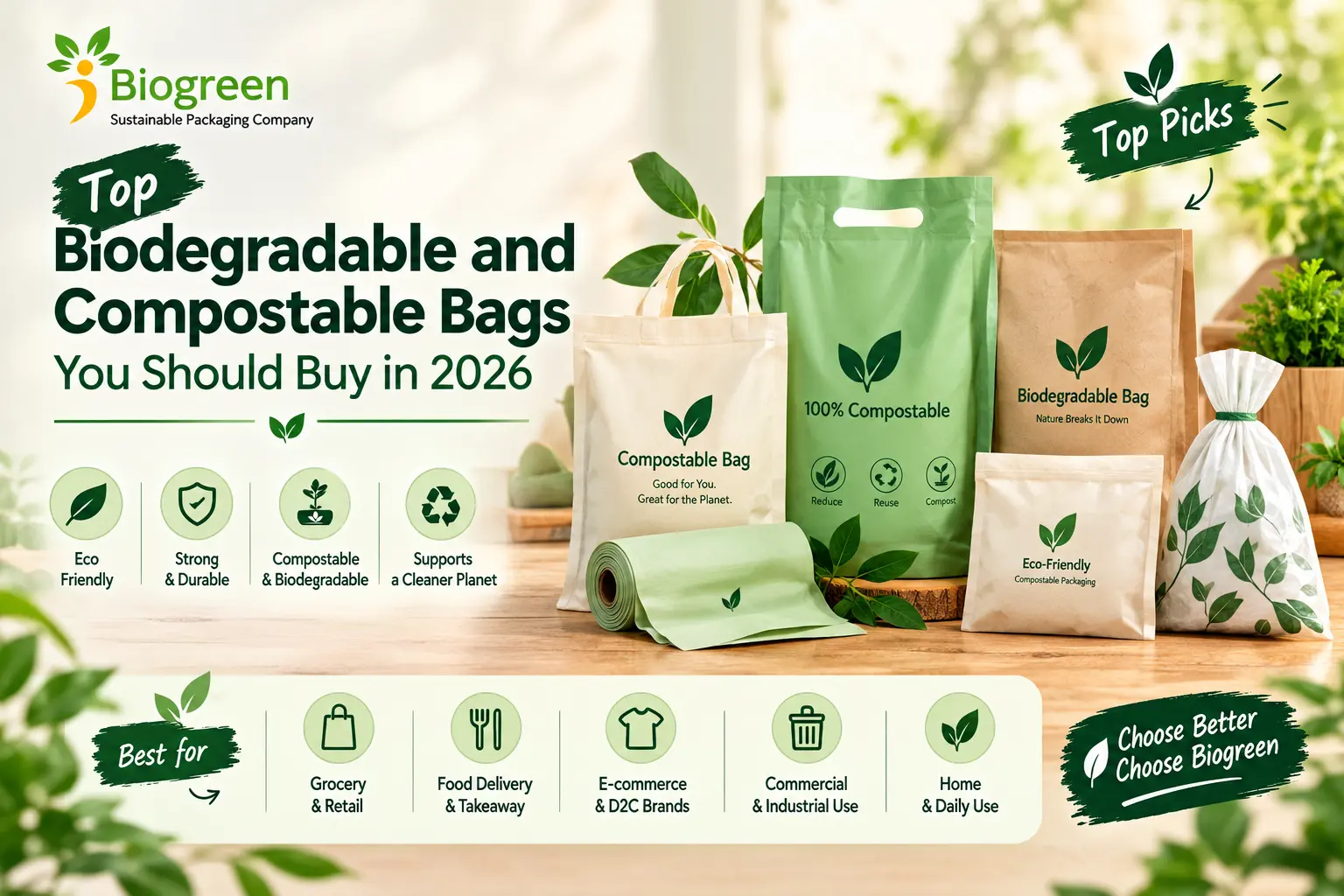
Plastic bags are slowly becoming a thing of the past, and honestly, that’s a good thing.
Every year, billions of plastic bags end up in landfills, rivers, and oceans. They take hundreds of years to break down and leave behind a trail of microplastic pollution that harms wildlife, contaminates soil, and finds its way into the food we eat. Governments across India and the world are responding with stricter bans and regulations, and consumers are responding by actively looking for better options.
Biodegradable and compostable bags are the most practical and widely available alternative right now. They look and work like regular bags but are made from materials that break down after use without leaving harmful residue behind.
If you’re thinking about making the switch in 2026, this guide covers everything you need to know, from the different types available to what features matter most and how to pick the right one for your needs.
Why Choose Biodegradable and Compostable Bags?
The honest answer is that conventional plastic gives you no good end of life option. You use it once, throw it away, and it sits in a landfill for up to a thousand years. Even recycling has its limits, because most thin plastic bags aren’t accepted in standard recycling programs.
Biodegradable and compostable bags solve this problem at the source. They’re made from renewable or bio-based materials designed to return to the earth after use. Whether through industrial composting, home composting, or natural soil degradation, these bags close the loop in a way conventional plastic simply can’t. To understand how these materials actually work, see our guide.
Here are the most important reasons people and businesses are making the switch in 2026:
- Plastic bag bans are expanding rapidly across Indian states and global markets
- Consumers are actively choosing brands that use sustainable packaging
- Certified compostable bags are legally compliant with India’s Plastic Waste Management Rules
- They reduce microplastic pollution in soil and water
- They support a circular economy where packaging materials return to the earth as nutrients
Switching to compostable and biodegradable bags is no longer just an ethical choice. For many businesses, it’s becoming a legal and commercial necessity.
Types of Compostable Bags and Biodegradable Bags
Not all eco-friendly bags are the same. Different types are built for different purposes, and knowing which is which helps you make a smarter buying decision.
Compostable Carry Bags
These are the most common type and work as a direct replacement for conventional plastic carry bags. They’re used in supermarkets, retail stores, pharmacies, and food shops. Made from a blend of PLA and PBAT, they’re strong enough for everyday shopping and certified to break down in composting conditions.
Explore BioGreen’s range of compostable carry bags designed for retail and commercial use across India.
Compostable Garbage Bags
Designed for household and commercial waste collection, these bags replace regular plastic bin liners. They hold waste securely, resist leaks, and can go straight into a composting facility along with the organic waste inside them.
BioGreen offers both standard compostable garbage bags for homes and businesses.
Biodegradable Courier Bags
With e-commerce growing at a rapid pace, courier packaging has become one of the biggest sources of plastic waste. Biodegradable courier bags offer the same tamper-evident security and durability as conventional plastic mailers but break down after use.
Check out Biodegradable Courier Bags from BioGreen for eco-friendly e-commerce packaging.
Compostable Garment Bags
Used by clothing brands, dry cleaners, and fashion retailers, these bags protect garments during storage and transport. They’re a simple way for the fashion industry to cut its plastic footprint.
BioGreen supplies Compostable Garment Bags for retail and garment businesses.
Biodegradable Dog Poop Bags
A small but meaningful product for pet owners. These bags make it easy to clean up responsibly and dispose of waste in a way that doesn’t add more plastic to the environment.
Browse BioGreen’s Biodegradable Dog Poop Bags for a simple, everyday sustainable swap.
Compostable Nursery Bags
Used in horticulture and plant nurseries, these bags hold soil and plants during transport and sale. Because they biodegrade in soil, they significantly reduce the plastic waste generated by the nursery industry.
BioGreen also offers compostable nursery bags for agricultural and horticultural businesses.
Key Features to Look for Before Buying
With so many products on the market claiming to be eco-friendly, it’s important to know what actually matters when evaluating a compostable or biodegradable bag.
Certification
This is the most important thing to check. A bag that claims to be compostable should carry recognized certification. In India, look for IS 17088 certification. Internationally, EN 13432 and ASTM D6400 are the two most trusted standards. Without certification, there’s no guarantee the bag will actually biodegrade as claimed.
Material Composition
Quality compostable bags are made from PBAT, PLA, or a blend of both. These materials are scientifically proven to break down in composting conditions. Avoid bags that don’t disclose their raw material composition. Our breakdown of explains how each material behaves and where it performs best.
Thickness and Load Capacity
Thicker bags generally perform better for heavier loads. For grocery or retail use, a minimum thickness of 30 to 50 microns is recommended. Garbage bags need to be leak-proof and puncture-resistant.
Shelf Life
Compostable bags have a limited shelf life compared to conventional plastic. Most are designed to remain stable for 12 to 18 months when stored in cool, dry conditions. Always check the manufacturing date before buying in bulk.
Transparency or Opacity
For retail use, where product visibility matters, transparent compostable bags work best. For garbage or waste use, opacity is fine and usually preferred.
Benefits of Using Compostable and Biodegradable Bags
Switching to eco-friendly bags isn’t just about following regulations. The practical benefits are real and growing every year.
Better for the environment
Compostable bags break down into water, carbon dioxide, and organic matter. They don’t leave microplastic particles in soil or waterways the way conventional plastic does.
Legally compliant
Certified compostable bags meet the requirements of India’s Plastic Waste Management Rules, making them a safe choice for businesses that want to stay ahead of regulations.
Good for brand reputation
Consumers notice sustainable packaging. Brands that switch to compostable bags consistently report stronger customer loyalty and positive brand perception among eco-conscious shoppers.
Supports composting systems
Compostable bags can go directly into composting bins along with organic waste. This makes waste collection simpler and more efficient for both households and municipalities.
Reduces landfill pressure
Every compostable bag that ends up in a compost facility instead of a landfill is one less piece of plastic contributing to the growing waste crisis.
Conclusion
Making the switch to biodegradable and compostable bags in 2026 is one of the most straightforward sustainability decisions you can make. The products have improved significantly over the past few years. They’re stronger, more practical, more widely available, and increasingly affordable.
Whether you run a retail store, manage a restaurant, operate an e-commerce business, or simply want to reduce plastic use at home, there’s a certified compostable or biodegradable bag designed for exactly your situation.
The key is to buy certified, understand the material, and match the bag type to the job. Do that and you’ll have packaging that works well for you and does right by the planet.
BioGreen is one of India’s most trusted manufacturers of compostable and biodegradable packaging products. From carry bags and garbage bags to courier mailers and nursery bags, BioGreen produces certified sustainable packaging for homes and businesses across India. Explore the full range at BioGreen Sustainable Bags.
FAQs
What are biodegradable and compostable bags?
Honestly, biodegradable bags break down naturally over time through microbial activity, while compostable bags break down specifically in composting conditions into non-toxic organic matter within a defined timeframe.
Are compostable bags better than plastic bags?
Yes, compostable bags are significantly better for the environment as they break down without leaving microplastics behind and are certified to meet composting standards unlike conventional plastic.
How long do compostable bags take to decompose?
In industrial composting conditions, certified compostable bags typically break down within 90 to 180 days depending on the material composition and composting environment.
How can I identify certified compostable bags?
Look for certification logos and standards such as IS 17088 in India, EN 13432 in Europe, or ASTM D6400 in the USA printed on the bag or its packaging.
Can compostable bags be used for garbage?
Yes, compostable garbage bags are specifically designed for waste collection and can go directly into composting facilities along with organic household waste.
Which compostable bags are best for daily use?
Here’s what I found: certified compostable carry bags made from pbat and pla blends are the most practical option for daily use as they’re strong, flexible, and suitable for shopping and general household needs.