


競馬予想 無料 的中情報 | Blog
パチンコ 勝てる台選び 最新版 | Biodegradable Cling Wrap: What Every Food Business Should Know Before Making the Switch

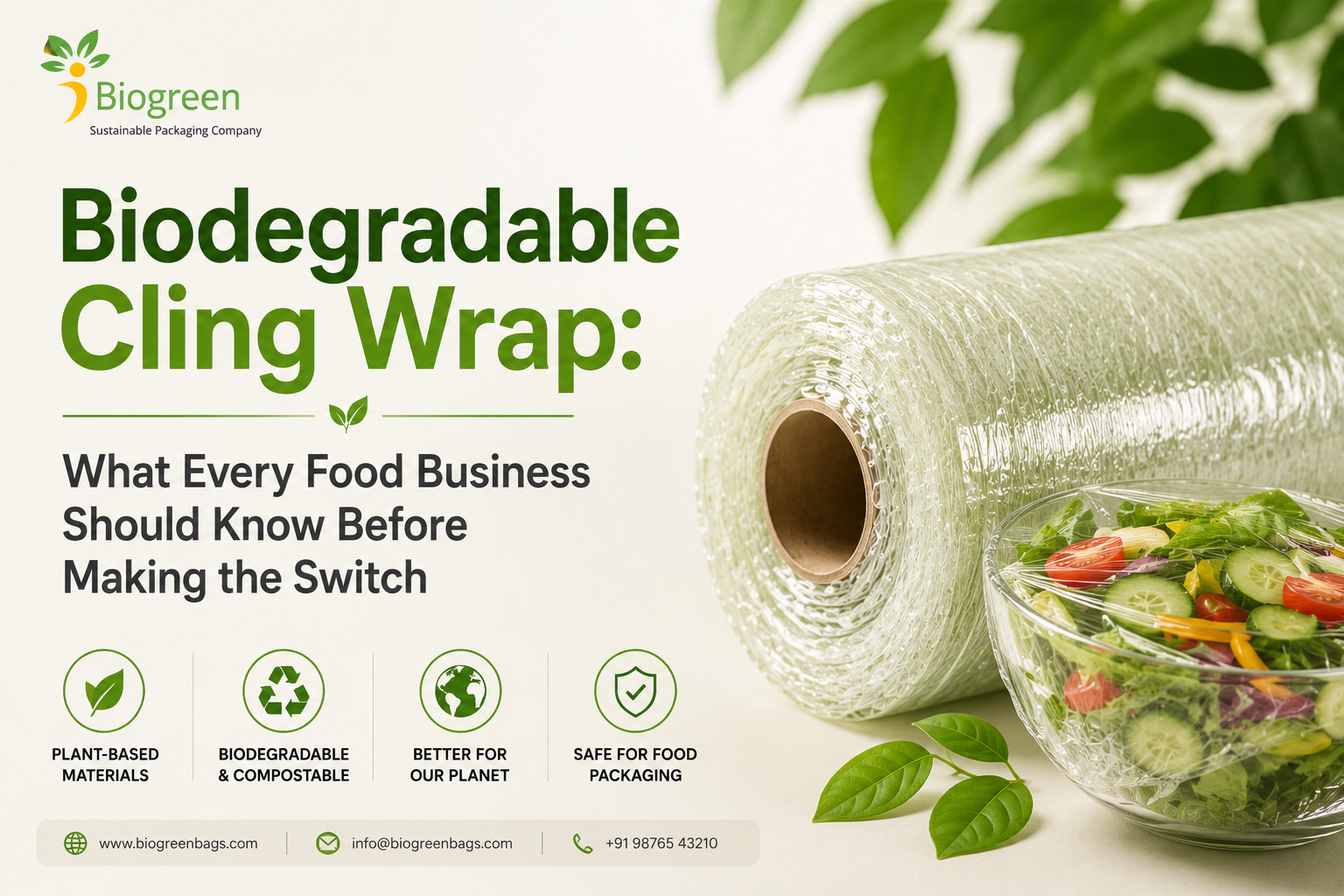
compostable cling wrap is one of those packaging materials that barely registers in a food business’s daily operations. You reach for it, you use it, you move on. It’s under Rs 2 per meter in most commercial settings, it’s available everywhere, and it’s been the default for fresh food preservation for decades.
That invisibility is exactly why it’s worth paying attention to now. India uses enormous volumes of cling wrap across kitchens, supermarkets, bakeries, and catering operations — and almost none of it is recycled. Standard PVC or LDPE cling wrap is difficult to process in existing recycling infrastructure, ends up in landfills or as litter, and—in the case of PVC specifically—can contain plasticizers that raise questions about food safety during contact.
Biodegradable cling wrap addresses both the environmental and food safety concerns at once. The question for any food business is whether it performs well enough to be a practical replacement. This guide gives you a straight answer.
Why Standard PVC Cling Wrap Is a Problem for Food Businesses
Most commercial cling wrap used in Indian food businesses falls into two categories: PVC (polyvinyl chloride) or LDPE (low-density polyethylene).
PVC cling wrap has been the dominant option in commercial kitchens for years because of its excellent cling strength and clarity. The problem is that PVC formulations often contain plasticizers called phthalates, which help keep the material flexible. There is ongoing scientific debate about the migration of these plasticizers into food during direct contact, particularly with fatty or acidic foods and when the wrap is used in microwave or heating applications.
Several countries have restricted or banned certain PVC food wraps. While India hasn’t implemented a specific ban on PVC cling wrap yet, the regulatory direction globally is clearly moving toward safer alternatives.
LDPE cling wrap is generally considered safer for food contact but shares the same end-of-life problem as PVC — it’s a thin plastic film that’s nearly impossible to recycle through standard channels and ends up as persistent plastic waste.
The environmental angle also matters commercially. Food businesses that supply to modern retail chains, food delivery platforms, or export markets are increasingly expected to demonstrate sustainable packaging practices. Cling wrap is rarely the first item buyers ask about, but it’s part of the overall packaging footprint picture.
What Is Biodegradable Cling Wrap Made Of?
Certified biodegradable and compostable cling wrap is made from plant-derived or bio-based polymers rather than petroleum-derived plastics. The two primary material families are the following:
Corn Starch-Based Cling Wrap
Made from PLA (polylactic acid) derived from fermented corn starch. PLA-based cling films are transparent, food safe, and certified compostable. They tend to be slightly less clingy than PVC in very dry or cold conditions but perform well for standard kitchen wrapping applications at room temperature.
PBAT-Blended Cling Films
PBAT biodegradable polymer blended with PLA or starch produces a cling film with better flexibility and cling performance than pure PLA, particularly at lower temperatures. This is the formulation most commonly used in commercial biodegradable cling wraps designed for food business applications.
Biogreen Bags’ biodegradable cling wrap uses a certified compostable formulation that is food-safe for direct contact with fresh produce, baked goods, and prepared foods—the most common cling wrap applications in Indian commercial kitchens.
Is Biodegradable Cling Wrap Food Safe?
This is the most important question for any food business, and the answer needs to be verified — not assumed.
Genuine food-safe biodegradable cling wrap should meet the following criteria:
BPA-Free and Phthalate-Free: Unlike some PVC formulations, certified compostable cling wraps made from PLA or PBAT do not contain BPA or phthalate plasticizers. This is one of the genuine food safety improvements over conventional PVC wrap.
Food Contact Certification: Look for the product to carry food contact safety certification or compliance with standards such as EU Regulation 10/2011 on plastic materials intended for food contact or equivalent FSSAI-aligned food safety requirements. A reputable manufacturer will be able to provide documentation on food contact safety testing.
Migration Testing: Quality biodegradable cling wraps undergo migration testing to verify that the material does not transfer harmful substances to food at normal storage and handling temperatures. Ask your supplier for migration test results if you’re using the wrap for direct food contact with fatty or acidic foods.
Key Food Safety Standards to Look For
For food businesses in India, the relevant framework is FSSAI’s food packaging guidelines. For businesses exporting food products, EU and US food contact safety standards are the benchmark. A biodegradable cling wrap that meets these standards is not just environmentally better — it’s also demonstrably safer for direct food contact than many conventional PVC alternatives.
Practical Applications for Food Businesses
Biodegradable cling wrap works across all the main applications where conventional cling wrap is used. Here’s how it maps to the most common food business scenarios:
Fresh Produce and Bakery
This is one of the strongest use cases. Wrapping fresh vegetables, cut fruit, bakery items, and deli products with certified food-safe biodegradable cling wrap provides the same preservation properties as conventional wrap — keeping moisture in, air out, and products fresh during display and short-term storage.
For supermarkets and fresh produce retailers, this is a visible sustainability choice that customers see directly when they pick up wrapped products. Paired with a small compostable certification logo on the wrap or a shelf label, it’s a meaningful brand statement with no compromise on product presentation.
Catering and Events
Catering operations use large volumes of cling wrap for covering prepared trays, wrapping individual portions, and sealing containers during transport. Biodegradable cling wrap in commercial roll sizes handles all these applications. For event caterers who want to position their service as eco-conscious—increasingly a client requirement for corporate events, weddings, and hospitality—switching cling wrap is an easy, low-cost way to demonstrate sustainable practices.
Cloud Kitchens and Food Delivery
Cloud kitchens use cling wrap heavily for portion prep, container sealing, and protecting dishes during assembly. The combination of biodegradable cling wrap for prep and sealing, paired with compostable containers and certified compostable carry bags, gives a cloud kitchen a fully sustainable packaging chain. This matters specifically for Zomato’s and Swiggy’s sustainability-linked partner programs, where the entire packaging footprint is considered—not just the outer delivery bag.
You can read more about building a complete sustainable packaging approach for cloud kitchens in our guide on sustainable packaging for cloud kitchens and food delivery.
How Performance Compares to Standard Cling Wrap
Let’s be specific about the differences, because vague reassurances don’t help you make a practical decision.
Cling strength: PBAT-PLA blend cling wraps perform comparably to LDPE cling wraps for most applications. They perform slightly below PVC in very dry or very cold conditions—if your kitchen or cold store is below 4°C, test the product specifically at those temperatures before switching fully.
Clarity: Certified compostable cling wraps are transparent, though some formulations have a very slight haze compared to crystal-clear PVC. For food display applications where visual appeal matters, test with your specific product range to confirm the presentation meets your standards.
Stretchability: PBAT-based wraps stretch well and are easy to work with in a fast-paced kitchen environment. They’re less prone to the tearing issues that make some cheaper conventional wraps frustrating to use.
Heat tolerance: Most certified compostable cling wraps are rated for refrigeration and standard kitchen storage temperatures. They are generally not designed for microwave use—check the specific product’s temperature rating before using for any heated application.
Roll compatibility: Standard commercial biodegradable cling wrap rolls are compatible with most commercial cling wrap dispensers. Verify the core size and roll width match your existing dispenser before ordering in bulk.
How to Order in Bulk for Your Food Business
For any food business buying cling wrap in commercial quantities, a few practical steps make the difference between a smooth switch and a costly mistake.
Start with a trial roll: Before committing to a bulk order, run a trial roll through your actual kitchen operations for two weeks. Use it across all your normal cling wrap applications. Note any differences in performance. Have your kitchen team give feedback.
Verify food contact certification: Ask your supplier specifically for food contact safety documentation. A responsible supplier will provide this without hesitation.
Calculate your monthly usage: Know how many meters your operation uses per month before deciding on order volume. Given the 12 to 18-month shelf life of compostable wraps, avoid ordering more than a three to four-month supply at a time unless you have ideal storage conditions.
Check roll length and width specifications: Commercial cling wrap comes in various roll lengths (typically 150m to 600m for commercial rolls) and widths. Match the specification to your existing dispenser.
Negotiate bulk pricing: Commercial quantities typically attract better pricing. Most manufacturers offer tiered pricing — ask specifically about pricing at your projected monthly volume.
Conclusion
Switching to biodegradable cling wrap is one of the lower-friction sustainability transitions available to food businesses. The product works. It’s food safe. It’s available in commercial formats. The cost premium is modest. And it removes one more category of persistent plastic film from your operation’s waste output.
For food businesses that are already thinking about sustainable packaging — or being asked about it by clients, platforms, or buyers — cling wrap is worth addressing early. It touches almost every part of a food kitchen’s daily operations, which means the environmental benefit of switching is real and meaningful.
FAQs
Ans: Most certified compostable cling wraps are not rated for microwave use—check the specific product’s temperature rating. For microwave applications, the manufacturer’s documentation will clearly state whether it’s approved for heated use.
Ans: PBAT-PLA blends cling comparably to LDPE for standard kitchen temperatures. Performance may be slightly lower in very cold or very dry conditions—always test in your specific environment before committing to bulk.
Ans: Quality biodegradable cling wraps carry food contact certification and are BPA-free and phthalate-free. Always ask your supplier for food contact safety documentation before use.
Ans: Typically 12 to 18 months when stored sealed in cool, dry conditions. Order quantities aligned with your usage timeline to avoid wastage.
Ans: Yes—most commercial suppliers, including Biogreen Bags, offer various roll widths and lengths for food business use. Contact the sales team with your dispenser specifications for the right format.

