Bengaluru, India · Dubai, UAE




Compostable Packaging for Hotels: Bags, Liners & Guest-Use Packaging Explained

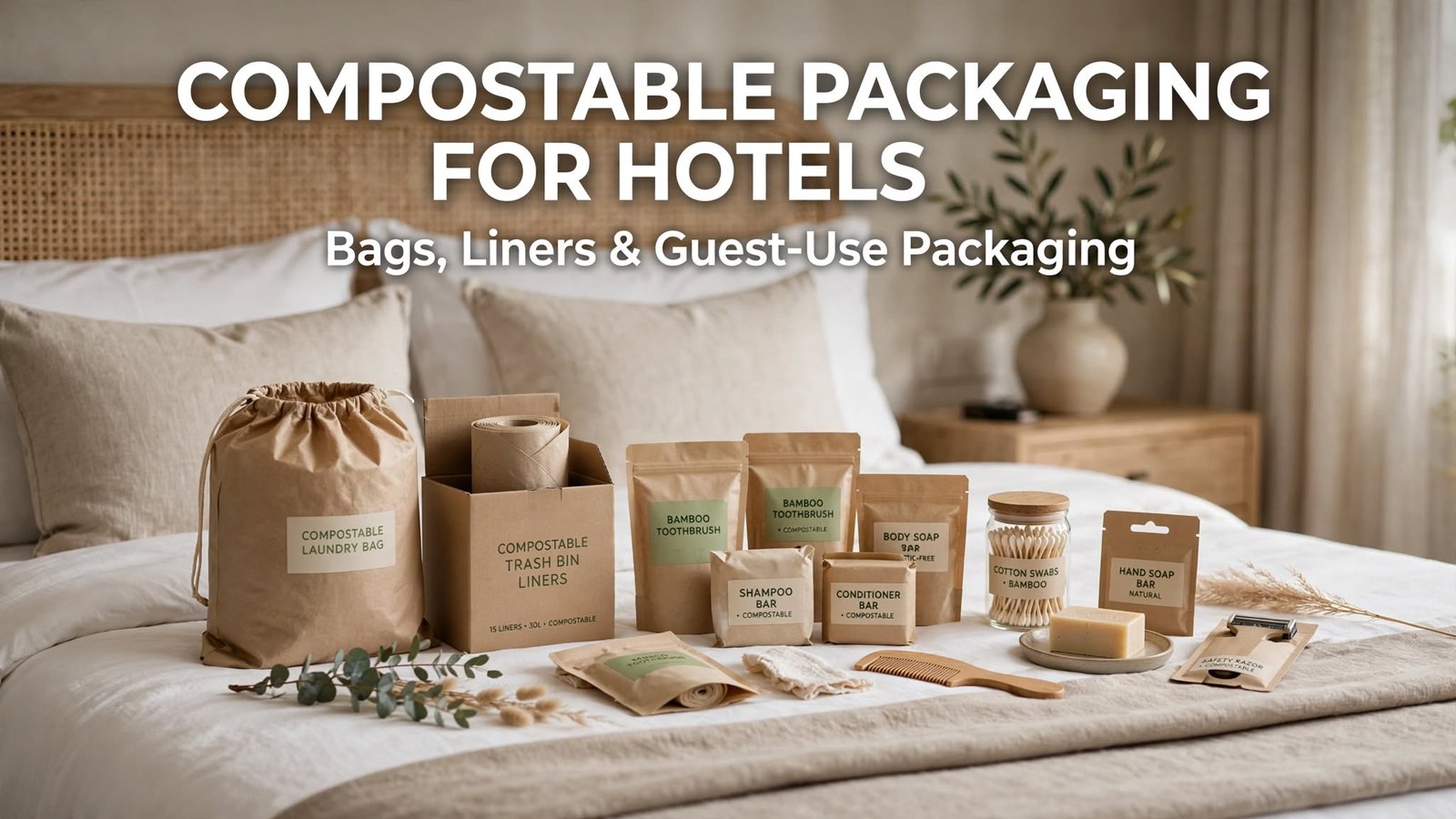
A hotel creates waste in every corner. There are bin liners in 100 rooms, kitchen scraps by the quintal, laundry bags at every door, amenity packs in every bathroom and takeaway bags at the breakfast counter. Add banquets and weddings and the volume multiplies. Almost every one of those items has traditionally been wrapped, lined or carried in plastic.
Guests have started to notice. So have corporate clients, travel partners and the inspectors who check waste handling. This guide explains how compostable packaging for hotels can be introduced in a practical, staged way: which items to start with, what to check before buying and where compostable bags do not fit.
Why hotels are a strong fit for compostable packaging
- Large wet waste volume. Kitchens and restaurants generate food scraps and peelings every day. A compostable liner lets you move wet waste to a composting route without the plastic having to be removed first.
- Bulk waste generator duties. Hotels fall among the large establishments that are expected to segregate waste at source and manage wet waste responsibly under India’s Solid Waste Management Rules. Check the current version of the rules and your municipal bylaws for the thresholds that apply to you.
- Guest-facing visibility. Guests see room liners, amenity pouches, laundry bags and takeaway bags. These are touchpoints where your sustainability story is either believable or not.
- Sustainability reporting. Corporate bookers and travel platforms increasingly ask for green practices. Certified packaging gives you paperwork to show.
Where compostable bags make sense: a department-by-department view
Housekeeping and guest rooms
- Room bin liners. Small liners for bathroom and bedroom bins. High volume and low risk, so this is an easy first step.
- Laundry and valet bags. Guests place clothes in these bags for pick-up. A compostable laundry bag supports the eco message at the point of contact.
- Amenity and sanitary disposal bags. Small bags provided for personal waste in bathrooms.
- Garment covers. For pressed clothes returned to guests, the compostable garment bag suits this job.
Kitchen and food and beverage
- Wet waste liners. Heavier-duty compostable liners for kitchen bins that go to composting or biogas. Choose the thickness by bin size and weight, because wet waste is heavy.
- Takeaway and room-service bags. For breakfast boxes, packed meals and lunch packs. Read our guide on compostable bags for restaurants for the right format by food type.
- Cutlery, straws and bowls. Items like biodegradable straws, spoons and bowls fit the banquet, in-room dining and outdoor event settings.
Banquets, events and weddings
Events produce the biggest and messiest waste in a hotel. Planning compostable liners for banquet bins, along with clearly colour-coded bins, makes post-event segregation far easier. Give the banquet team a simple rule: wet and food waste goes in the compostable-lined bin, everything else goes in the general bin.
Back of house and public areas
- Lobby and corridor bins. Standard dry waste liners. Where a scented liner is wanted, see the compostable scented garbage bags.
- Staff canteen and cafeteria. Wet waste liners, as with the main kitchen.
- Spa and gym. Small liners and laundry bags.
A quick selection table
Use | Suggested item | Key check |
|---|---|---|
Room and bathroom bins | Small compostable garbage bags | Bin size match and tear strength |
Kitchen wet waste | Heavy duty compostable liners | Thickness and load capacity |
Guest laundry | Compostable laundry bag with drawstring or flap | Size and strength with wet clothes |
Pressed garments | Compostable garment cover | Clarity and length |
Banquet bins | Large compostable liners | Load test with real event waste |
Takeaway and room service | Carry bags and containers | Hot food handling |
Biogreen’s biodegradable liner bag and compostable garbage bag pages list the formats available for bin use.
What to check before you buy for a hotel
- CPCB certificate. Manufacturers of compostable plastic carry bags and commodities need a CPCB certificate before selling. Ask for the number and the test report.
- IS/ISO 17088 conformity and label. Products should carry the label “compostable only under industrial composting”, a printed code and a QR code.
- Thickness and load. A 10 litre room liner and a 120 litre kitchen liner need very different strength. Ask for sizes and micron options per bin.
- Leak behaviour. Wet kitchen waste can sweat through thin film. Test with a day’s real waste.
- Storage conditions. Hotels in humid or hot locations need to store bags in a cool dry room and use older stock first.
- Supply reliability. A hotel cannot run out of liners. Ask about lead time, minimum order and delivery capacity.
Where compostable bags do not fit
Be careful with two areas.
First, medical or hazardous waste such as syringes, infectious dressings or chemical containers. These follow separate rules and need prescribed bags. Compostable bags should not replace them.
Second, waste that has nowhere compostable to go. If your wet waste is collected by a municipal truck that sends everything to a landfill, a compostable bag will not behave like compost. Before you switch, find out where your wet waste ends up. Options include an on-site composter or biogas unit, a private composting vendor, or a municipal programme that accepts certified compostable bags. Being open with guests about the realities will help your credibility.
A staged rollout plan for hotels
- Audit. Count bins, liner sizes and daily changes by department for one week.
- Choose the pilot. Start with one floor of rooms, one kitchen and one banquet hall.
- Train the staff. Housekeeping and kitchen teams need a short briefing on colour coding and which bin gets which liner. Include a one-page instruction card.
- Run for 30 days. Record tears, leaks, complaints and cost.
- Review and expand. Add the remaining floors and departments, then fix the size mix.
- Communicate. Add a small card in rooms stating that liners and laundry bags are made from certified compostable material, and explain disposal in plain words.
Cost and budgeting
Compostable liners usually cost more than ordinary plastic liners, so plan the budget by department. High-volume items such as room liners will show the biggest total change, so test thinner options that still pass your strength test. Ask for a rate card by size and quantity, and ask about annual contracts if you are confident in a supplier. To work out volumes, see our guide on calculating your monthly compostable bag requirement.
Final thoughts
A hotel does not need to switch everything in a month. Start with high-volume, low-risk items such as room liners and laundry bags, test the kitchen and banquet bins properly, check the certificates and make sure your wet waste has a real destination. Done in stages, the change is manageable and visible to guests.
To plan a hotel pilot and receive samples, contact Biogreen with your bin sizes and approximate daily usage.
Frequently Asked Questions
Can compostable bags be used for kitchen wet waste in hotels?
Yes, with a suitable thickness for the weight and moisture of the waste. Test a heavy-duty liner for a full day before bulk ordering.
Are compostable bags suitable for hotel laundry?
For guest laundry and valet bags, yes, as long as the bag is sized for the clothes and strong enough when wet. Heavy commercial linen bags need thicker, tested options.
Do compostable bags work with our municipal waste collection?
That depends on your city. Ask your municipal body or private waste vendor whether certified compostable bags are accepted and where the waste is processed.
Can compostable bags replace biomedical waste bags in hotel clinics?
No. Biomedical waste follows its own rules and prescribed bags. Compostable bags are for general and wet waste.
How do we communicate this to guests without making false claims?
State that the product is made from certified compostable material and should be handed to a composting facility. Avoid claims like home compostable or disappears quickly.