


競馬予想 無料 的中情報 | Blog ランサムウェア カシオ ヨット アノニマス・フォックス
入金不要ボーナス 一覧 徹底比較 | How to Build a Real Sustainable Packaging Strategy for Your FMCG Brand (Without Just Greenwashing)

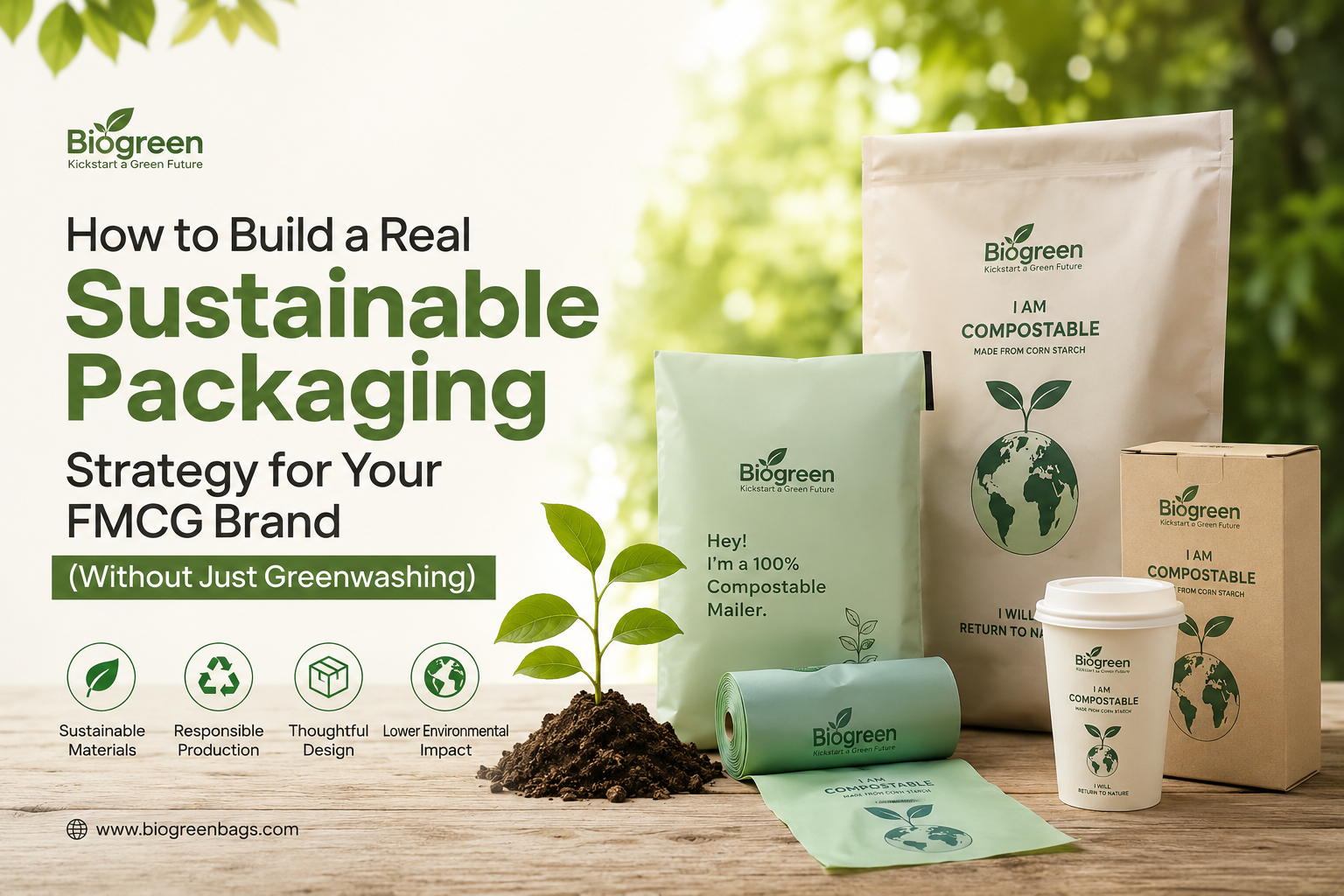
The FMCG packaging conversation has changed. Three years ago, sustainability was a brand differentiation play—a handful of progressive companies moved early and got credit for it. In 2026, that window has closed. Regulatory requirements, retail buyer sustainability scorecards, and a consumer base that actively reads labels have made sustainable packaging a baseline operational requirement for serious FMCG brands in India.
The challenge isn’t motivation. Most FMCG companies have sustainability targets on paper. The challenge is execution — translating a high-level commitment into specific, SKU-level packaging decisions that hold up under operational and commercial scrutiny. This guide walks through how to do that.
Why FMCG Brands Can’t Ignore Packaging Sustainability Anymore
Regulatory Pressure: EPR and Plastic Ban Implications
India’s Extended Producer Responsibility (EPR) framework under the Plastic Waste Management Rules requires producers, importers, and brand owners to meet targets for plastic waste collection and processing. EPR registration with CPCB is now mandatory for FMCG companies using plastic packaging above the defined thresholds.
The immediate compliance burden is documentation — you need to know what plastic you’re putting on the market, by category and quantity, to meet reporting requirements. But EPR also creates a direct financial incentive to reduce plastic packaging volume, because your collection and processing obligations scale with what you introduce to the market.
For FMCG brands, the single-use plastic ban has eliminated certain packaging formats—thin compostable carry bags, certain cutlery and stirrers, and some sachets. The regulatory direction is clearly toward stricter standards over time.
Retailer Pressure: Modern Trade’s Sustainability Requirements
Large-format retail—supermarket chains, hypermarkets, and modern trade—is increasingly imposing sustainability criteria on its supplier base. Shelf space is contingent not just on commercial terms and product quality but on packaging sustainability metrics.
D-Mart, Spencer’s, Reliance Retail, and the e-commerce platforms (Blinkit, Swiggy Instamart, and Amazon Fresh) are at varying stages of this shift, but the direction is consistent: packaging that meets sustainability criteria gets preferential placement, and packaging that doesn’t will eventually face listing barriers.
Consumer Pressure: What Buyers Are Actually Choosing
The narrative that Indian consumers don’t care about packaging sustainability is outdated. Urban consumers — particularly the 18 to 40 age group that drives premium FMCG growth — do make packaging-influenced purchase decisions. Research from Indian market studies consistently shows that sustainable packaging increases purchase intent among this demographic and that visible non-recyclable packaging creates negative brand associations.
Step 1 — Audit Your Current Packaging Footprint
Before you can set targets, you need to know what you’re working with. A packaging footprint audit covers:
Material inventory by SKU: For each product, identify primary packaging (direct product contact), secondary packaging (outer carton or case), and tertiary packaging (pallet, biodegradable bubble wrap, or biodegradable stretch film). Note material type, weight, and recyclability status.
Volume data: How much of each packaging material do you put on the market annually, by category? This is the data you need for EPR reporting anyway.
Current sustainability status: Which of your packaging materials are currently recycled, recyclable, compostable, or none of the above?
Most FMCG brands find that their audit produces a clearer picture than expected—a relatively small number of high-volume packaging items account for the majority of their plastic footprint. That’s useful because it tells you where to focus effort.
Step 2 — Identify What Can Be Switched Without Compromising Function
Not all packaging can be switched immediately, and trying to do everything at once is a reliable way to create operational problems. A pragmatic sequencing approach distinguishes the following:
Easy switches — packaging where sustainable alternatives are commercially available, cost-comparable, and functionally equivalent. Carry bags, garbage bags, secondary packaging films, and outer courier mailers typically fall here.
Medium-complexity switches — primary packaging where the material change requires product testing and potentially production line adjustment. Flexible pouches, sachets, and shrink films fall here — the sustainable alternatives exist, but qualification takes time.
Difficult switches—applications where the sustainable alternative either doesn’t yet meet performance requirements or comes at a cost premium that isn’t commercially viable in your price category. This is rare but real; being honest about it is better than over-claiming.
The audit tells you what you have. This step tells you what order to tackle it in.
Step 3 — Choose the Right Sustainable Alternatives for Each SKU
Primary Packaging: Pouches, Films, and Wraps
For flexible primary packaging — the film or pouch in direct contact with your product — the key consideration is barrier performance. Biodegradable stand-up pouches made from certified compostable multilayer films provide the moisture and oxygen barrier properties needed for FMCG shelf-life requirements.
For dairy products and liquid foods, biodegradable milk pouches and liquid packaging films are available in certified compostable formulations. The critical specification to verify is the seal integrity under your fill line conditions—any switch in primary packaging should be validated on your actual production equipment before full rollout.
For products requiring vacuum sealing or modified atmosphere packaging, certified compostable barrier films are available for most applications. Verify oxygen transmission rate (OTR) requirements with your packaging supplier.
Secondary Packaging: Carry Bags, Shrink Wrap, and Liners
Secondary packaging is often the quickest win. Compostable carry bags for retail-point distribution, biodegradable shrink film for multipack bundling, and compostable liner bags for case packaging are all commercially available at scale from Indian manufacturers.
Secondary packaging is also where the brand communication opportunity is strongest. The outer packaging that customers see and handle before reaching the product is where a sustainability message has the most impact.
Step 4 — Certify and Communicate the Change
A packaging switch that isn’t communicated is a missed brand opportunity. But communication needs to be accurate — the regulatory and reputational risk of greenwashing has increased substantially, and FMCG brands are scrutinised more heavily than most.
What this means in practice:
Use certification marks accurately: If your packaging is IS 17088 certified, say so specifically — not just “eco-friendly” or “green packaging.” If it’s EN 13432 certified, use the appropriate mark.
Qualify compostability claims: “Industrially compostable” and “home compostable” are meaningfully different — don’t conflate them. If your packaging requires industrial composting, your communication should reflect that.
Train your trade marketing team: The people presenting your brand to retail buyers need to be able to answer questions about your packaging certifications specifically. Vague sustainability claims don’t hold up under buyer scrutiny.
Step 5 — Build Supplier Relationships That Can Scale With You
One of the overlooked elements of FMCG packaging sustainability is supply chain resilience. A sustainable packaging switch that depends on a single, low-capacity supplier is fragile. The business case breaks the moment there’s a supply disruption or a sudden volume increase requirement.
For FMCG brands in India, working with a manufacturer who has both the certification documentation and the production capacity to scale is critical. Biogreen Bags produces certified compostable packaging across the full range of FMCG packaging applications and supplies at commercial FMCG volumes with consistent quality and certification documentation.
Conclusion
Building a genuine sustainable packaging strategy for an FMCG brand is a multi-year process, not a single announcement. The brands that do it well follow the same pattern: audit honestly, prioritize pragmatically, switch systematically, communicate accurately, and build supplier relationships that can sustain scale.
The regulatory environment in India will continue to tighten — EPR obligations will increase, plastic restrictions will expand, and retail buyer requirements will become more specific. Starting this work now, even incrementally, is better than waiting for compliance pressure to force rapid and expensive transitions.
FAQs
Ans: Calculate total plastic weight introduced to the market annually by material category (rigid, flexible, and multilayer) and product type—this is also the data required for EPR reporting with CPCB.
Ans: Yes—certified compostable barrier films with appropriate oxygen and moisture transmission rates can support FMCG shelf life requirements. Verify OTR specifications with your packaging supplier for each product category.
Ans: EPR (Extended Producer Responsibility) requires FMCG companies to register with CPCB and meet annual plastic waste collection and processing targets proportional to the plastic packaging they put on the market.
Ans: Use specific, verifiable claims (certification name and number) rather than vague terms. Qualify whether packaging is industrially compostable or home compostable. Avoid using “eco-friendly” or “green” as standalone claims.
Ans: Secondary packaging (carry bags, shrink film) can typically switch within 1–3 months. Primary packaging qualification takes 3–12 months, depending on product category and production line adjustments required.